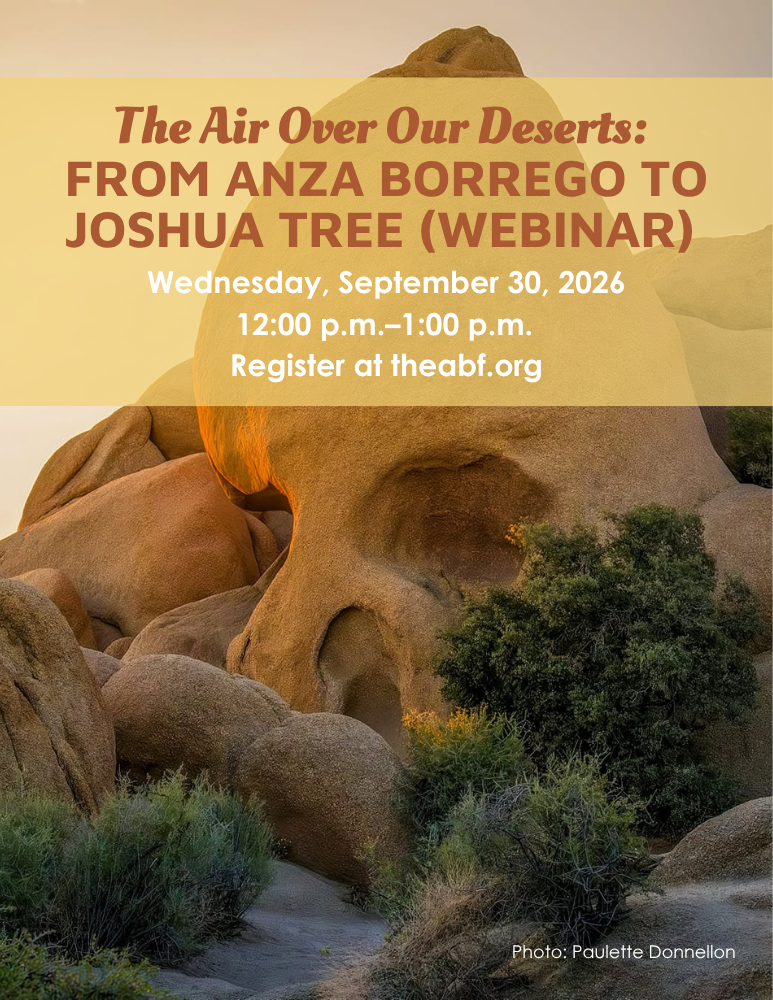
The Air Over Our Deserts: From Anza Borrego to Joshua Tree (Webinar)
The air over California’s deserts is anything but empty. Discover how desert plants, soils, dust, and even distant cities create a dynamic atmosphere that influences air quality, climate, and the landscapes we love.
What to Expect:
- Learn what aerosols are and how they affect the air we breathe and the climate.
- Discover how desert plants like creosote and brittlebush release natural compounds that shape atmospheric chemistry.
- Explore how dust, soils, and pollution from distant urban areas interact over desert landscapes.
- Hear about the latest scientific research on the atmosphere above Anza-Borrego and Joshua Tree.
- Gain a new perspective on the hidden processes happening in the desert air all around us.
Who Should Attend:
- Nature enthusiasts and desert lovers
- Hikers, campers, and outdoor recreationists
- Citizen scientists and environmental volunteers
- Educators and students interested in ecology or climate science
- Anyone curious about the science of California’s desert environments
REGISTER TODAY!
Date: Wednesday, September 30, 2026
Time: 12:00 p.m.–1:00 p.m.
Location: Online via Zoom. Instructions to access the webinar will be sent the week of the event.
Cost:
ABF Member: FREE Not a member? Join today for as little as $35 and go to this event for free!
Non-Member: $10
Military/Student/Teacher/Tribal/Veteran: $8
Cancellation Policy & Scholarships: Please see our FAQs page to read our cancellation policy and learn about scholarship options.
What Past Participants Are Saying:
“Depth, thoroughness and clarity of information as well as intriguing videos”
“I always eagerly anticipate upcoming virtual programs…they are terrific.”
“The presenter was articulate, well-paced, and really knew the topic.”
Bio:
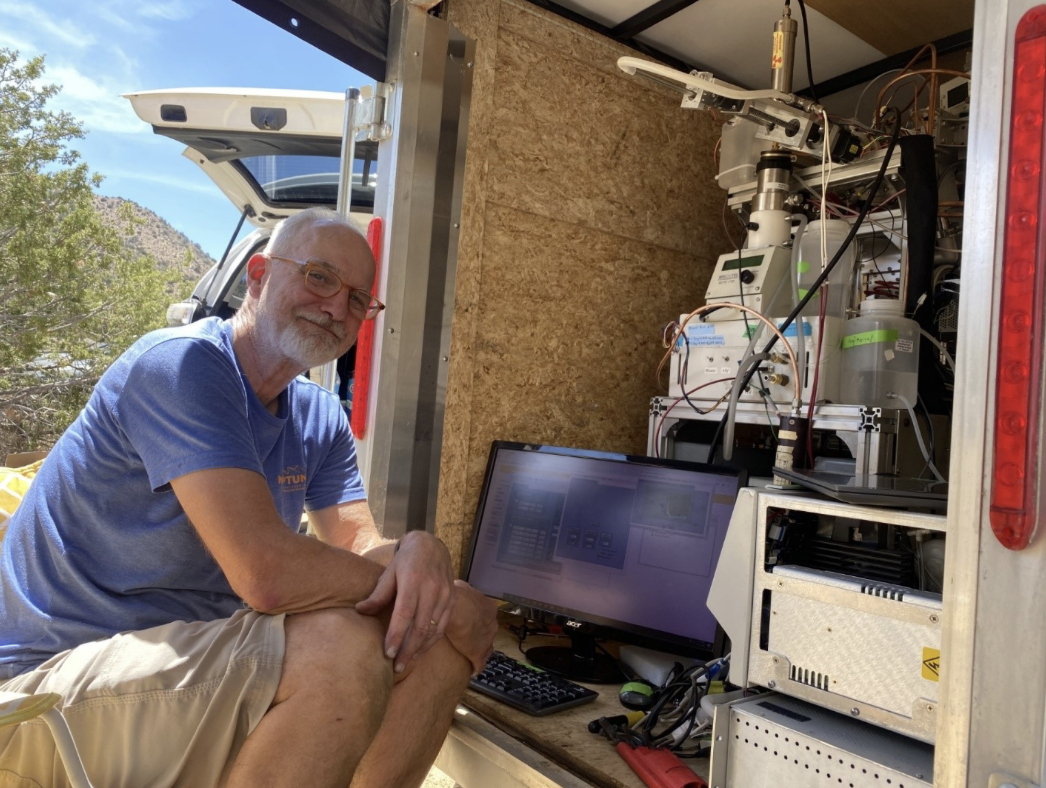
Jim Smith is an atmospheric chemist and professor at the University of California, Irvine. His research focuses on understanding the tiny particles that drift through our air — where they come from, how they form, and what they mean for the air we breathe and the climate we all share. To study particles nearly too small to imagine — some just a few nanometers across, thousands of times thinner than a human hair — Smith helped develop a specialized scientific instrument capable of identifying what these particles are made of at the molecular level. It is one of only a handful of tools in the world able to do so. Smith earned his undergraduate degree in physics from Harvey Mudd College and his Ph.D. in Environmental Science and Engineering from the California Institute of Technology (Caltech).