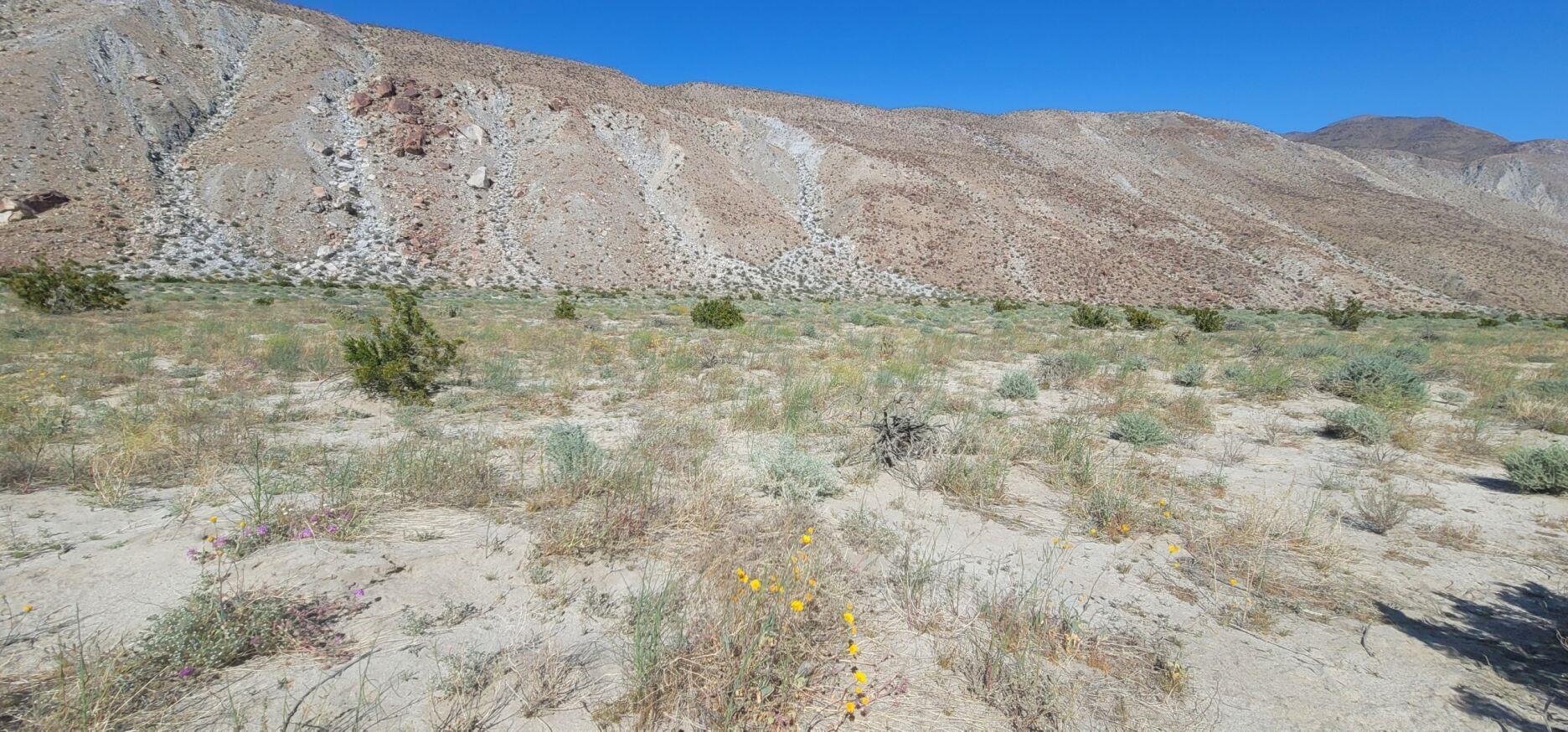
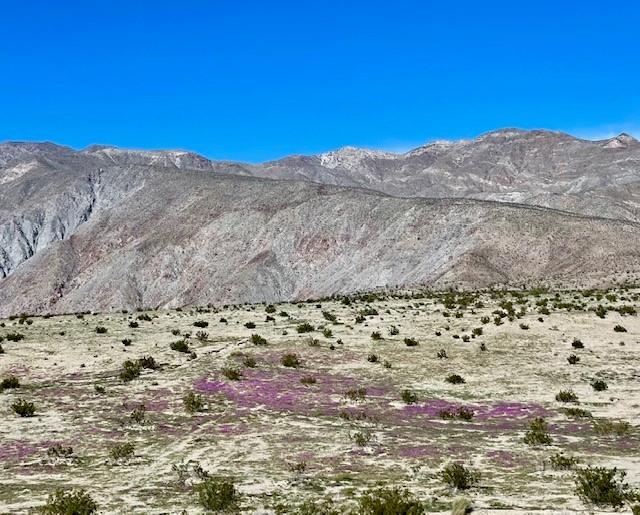
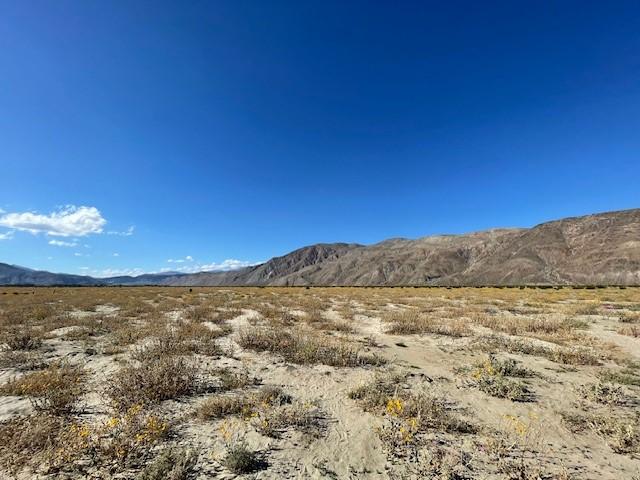
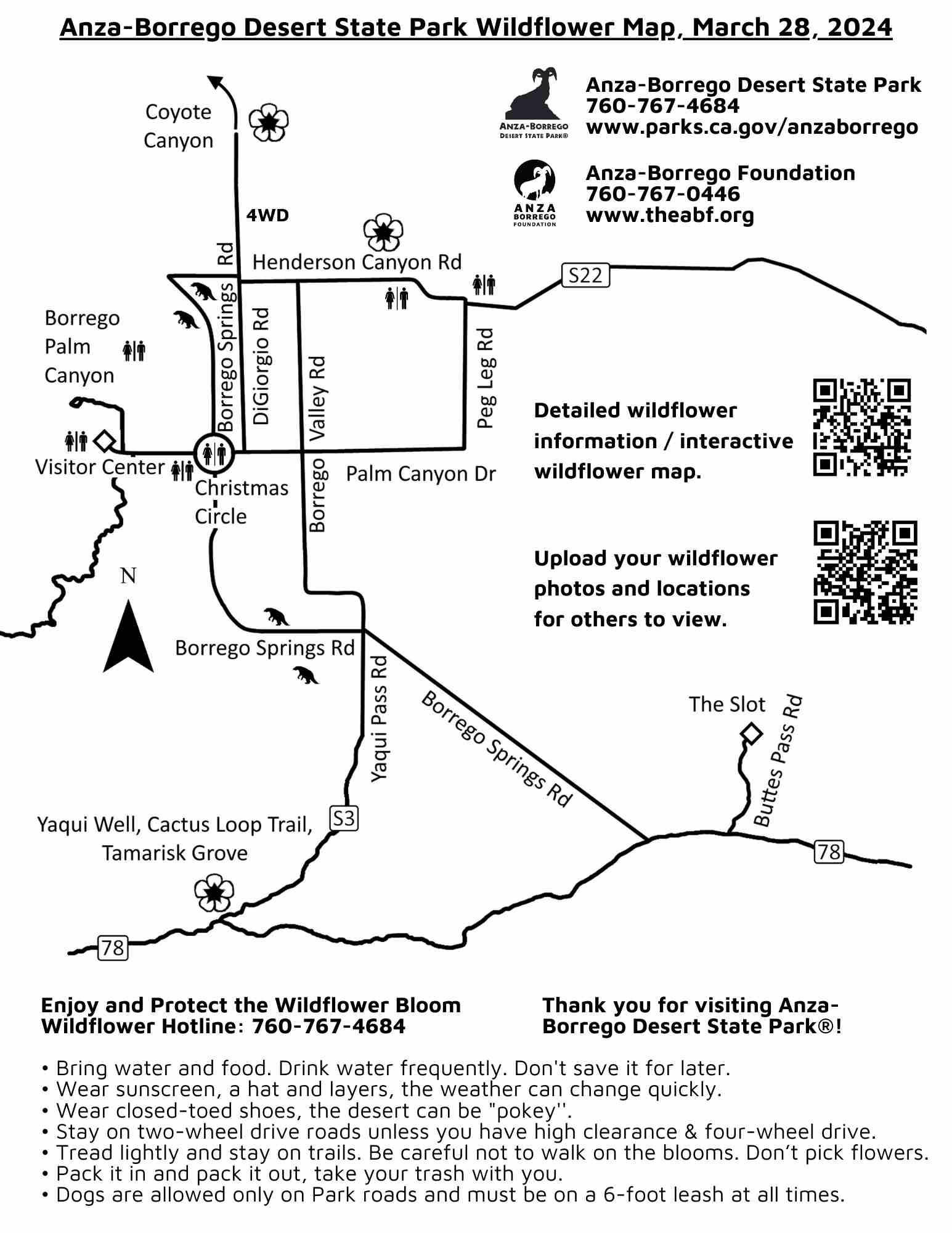
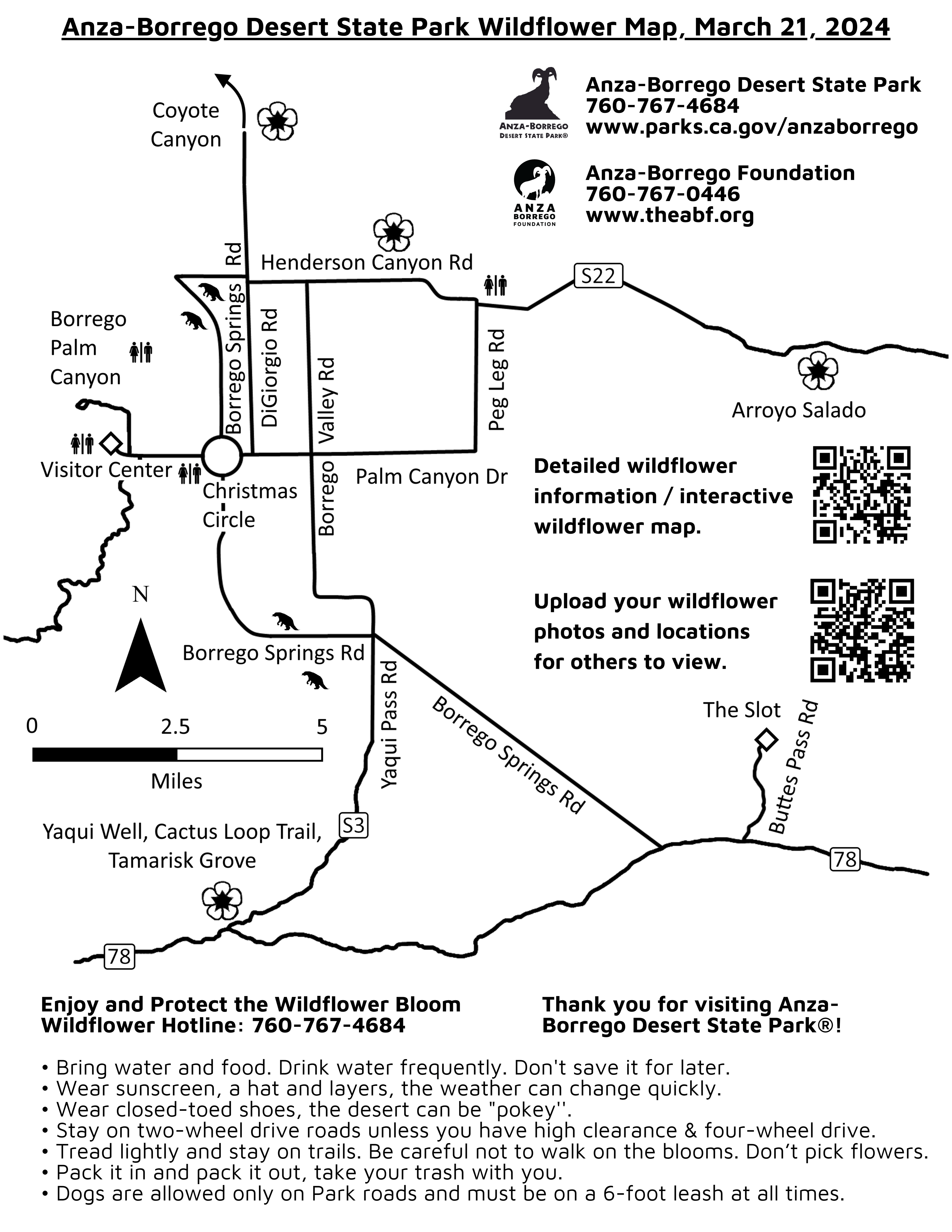
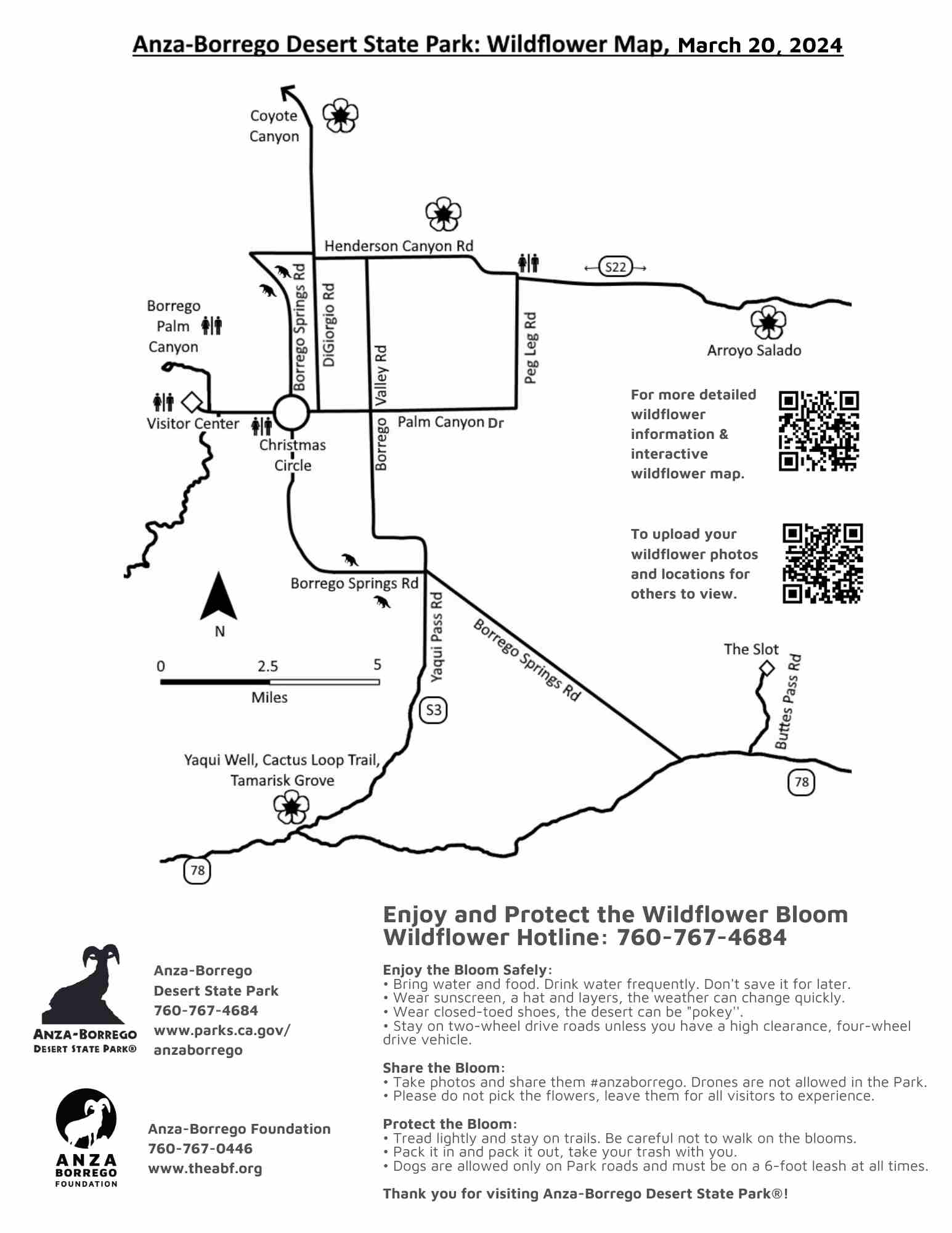
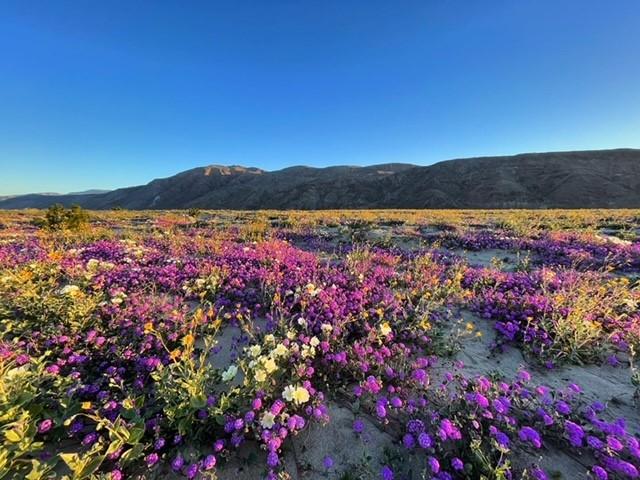
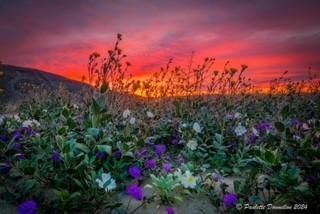
We received some rain in the past 24 hours, and it looks like more is on the way! Rain could be very helpful in extending the bloom and may be the extra push needed to turn what is already an amazing flower year into something even more spectacular!
All areas from last week’s report are similar this week:
Henderson Canyon Road
Wildflowers here are still hanging on, and with the potential rain ahead, this area may get a needed boost and continue producing fresh blooms. 2WD ok- flowers right off paved road. Flowers blooming:
Desert sand verbena (Abronia villosa)
Brown-eyed primrose (Camissonia claviformis)
Desert sunflower (Geraea canescens)
Evening primrose (Oenothera deltoides)
Spanish needles (Palafoxia arida)
Apricot mallow (Sphaeralcea ambigua)
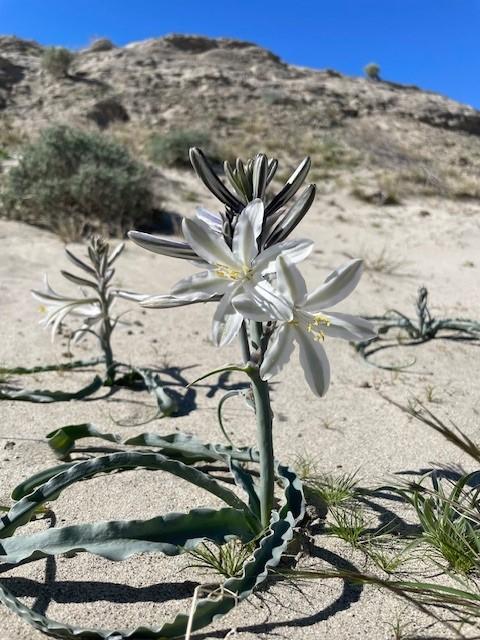
Desert lily (Hesperocallis undulata)

Coyote Canyon
Coyote Canyon is beautiful right now, with multiple areas actively blooming. It’s also a great option if you’re hoping for a more spread-out wildflower experience. Closed at third crossing. AWD / 4X4 recommended. Flowers blooming:
Desert sand verbena (Abronia villosa)
Brown-eyed primrose (Camissonia claviformis)
Desert sunflower (Geraea canescens)
Evening primrose (Oenothera deltoides)
Spanish needles (Palafoxia arida)
Apricot mallow (Sphaeralcea ambigua)
Desert lily (Hesperocallis undulata
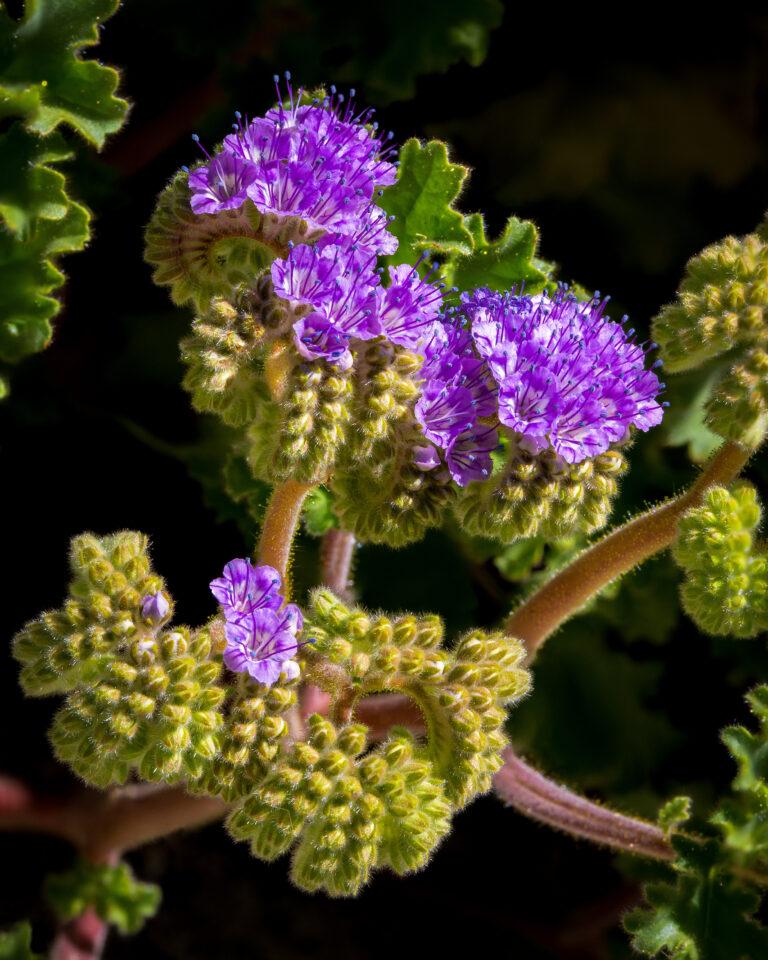
Desert phacelia / Small-flowered phaceli (Phacelia minor)
Desert star (Monoptilon bellioides)
- Frémont’s pincushion (Chaenactis fremontii)

Borrego Palm Canyon
Borrego Palm Canyon is also looking beautiful, with more blooms than our last update, a great sign that the season still has some momentum. 2WD ok- traill off paved road. Flowers blooming:
Desert lavender (Condea emoryi)
Chuparosa (Justicia californica)
Datura / desert thorn-apple (Datura discolor)
Yellow nightshade groundcherry (Physalis crassifolia)
Emory’s rockdaisy (Perityle emoryi)
Parish’s poppy (Eschscholzia parishii)
Bush mallow (Malacothamnus aboriginum)
Desert phacelia / Small-flowered phacelia
(Phacelia minor)
Common fiddleneck (Amsinckia intermedia)
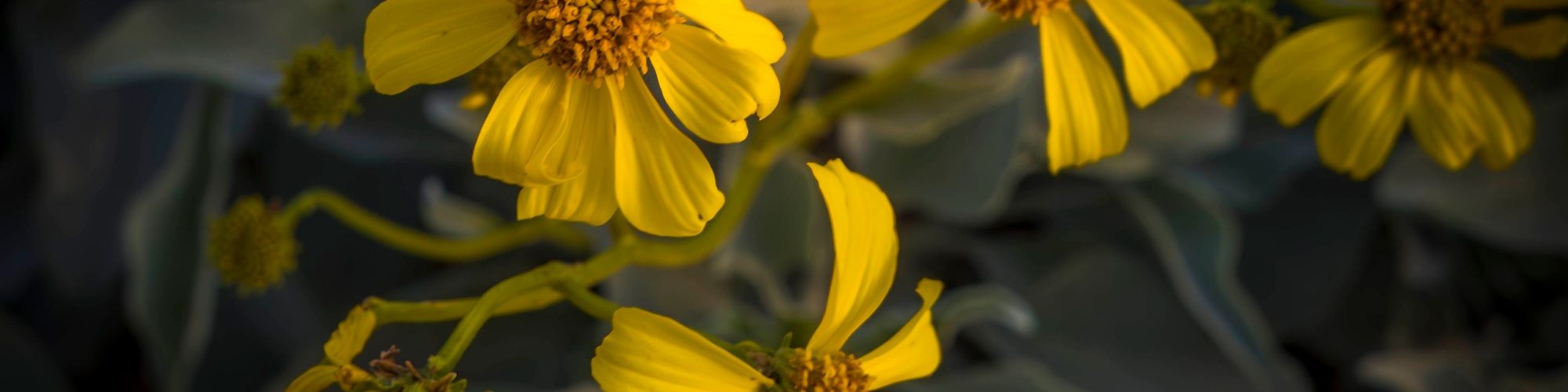
Brittlebush (Encelia farinosa)

S-22 Corridor
Wildflowers are blooming all along the S-22 corridor, making for a scenic drive with plenty of opportunities to spot color from the road and at pullouts. Make sure to pull all the way off the road and watch for traffic when crossing.

Entrance to Coachwhip Canyon (East Side):
- Brown-eyed primrose (Camissonia claviformis)
- Desert sand verbena (Abronia villosa)
- Desert lily (Hesperocallis undulata)
Other notes:
- Medium soft sand at entrance (fine for four-wheel-drive or all-wheel-drive vehicles, other vehicles can park along the bottom of the road)
- Easily accessible from the entrance to the canyon, or the side of the road, with the beautiful backdrop of the Santa Rosa mountain range behind

Rainbow Canyon
Road conditions: 2WD ok / park on side of highway. Flowers blooming: verbena, cheesebush, ocotillo (even a red one!), yucca, mamillaria, desert poppy, desert tobacco, fiddleneck, thickleaf ground cherry, Ca barrel cactus, desert chicory, brittlebush, Parrish’s goldeneye, chuparosa, desert lavender, distant phacelia, suncup, Hartweg’s climbing milkweed, shrubby deervetch, cryptanthas

Desert Lillies are blooming in Arroyo Salado, Truckhaven (Verbena, sunflowers, and primrose also blooming) and Inspiration Wash. AWD or 4×4 recommended for all three areas.

South Palm Wash
Road conditions: Packed sand, but you need high clearance if you want to drive down the hill to park at the bottom. Otherwise, park at the top of the hill and walk down.
Flowers: cheesebush, creosote, desert sunflower, narrow leaf cryptantha, distant phacelia, lupine, desert lily, sand verbena, blazing star, desert chickory, brittlebush, heartleaf suncup, desert tobacco, brown eyes, Ca primrose, Spanish needle

Is this a super bloom?
Not at this time. While the Park has received approximately 3.5 inches of rain over the past three months (according to Steele/Burnand Desert Research Center)—a significant amount for the desert—a true super bloom requires a rare combination of conditions, including sustained rainfall over multiple months, cool nighttime temperatures, minimal heat spikes, and calm winds that allow seedlings to establish.
Even without a super bloom, years like this can still offer rewarding and meaningful wildflower experiences.
How long will the flowers last?
Wildflower timing in the desert is highly variable. Individual blooms may last days to a couple of weeks, while overall wildflower viewing can extend several weeks to a few months depending on:
Temperature changes
Wind events
Localized rainfall
Elevation and exposure
Blooms typically appear in waves, moving through different canyons, washes, and elevations rather than peaking all at once. Warm temperatures or strong winds can shorten bloom duration, while cooler, calm conditions may allow flowers to last longer.
Because conditions can change quickly, we recommend visiting sooner rather than later and checking updates frequently.
Visiting responsibly
Help protect these fragile blooms so others can enjoy them:
Don’t doom the bloom: Stay on designated trails and avoid trampling flowers.
No dogs in flower fields or on trails anywhere in the Park. Dogs must be leashed and are allowed only on dirt roads.
Be patient with crowds—wildflower season is short and draws many visitors.
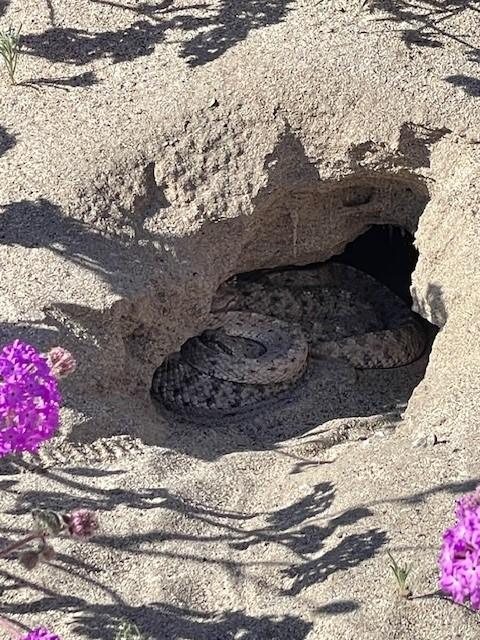
Watch your step: Rattlesnakes are active year-round and often live among the flowers.
Stay updated
Wildflower conditions can change rapidly based on weather and temperature.