The Astonishing Diversity of Anza-Borrego Desert State Park
If you think deserts are empty or barren, you haven’t truly explored one—especially not Anza-Borrego Desert State Park, one of the most ecologically and geologically diverse landscapes in California, and one of the most remarkable desert ecosystems in North America.
Anza-Borrego is a place of dramatic elevation shifts, hidden water systems, rare and endemic species, internationally significant fossil beds, ancient cultural landscapes, and protected wilderness so vast you can spend a lifetime here and still find new corners of wildness.
Here’s what makes Anza-Borrego so extraordinary.
Size and Scale: Bigger Than You Think
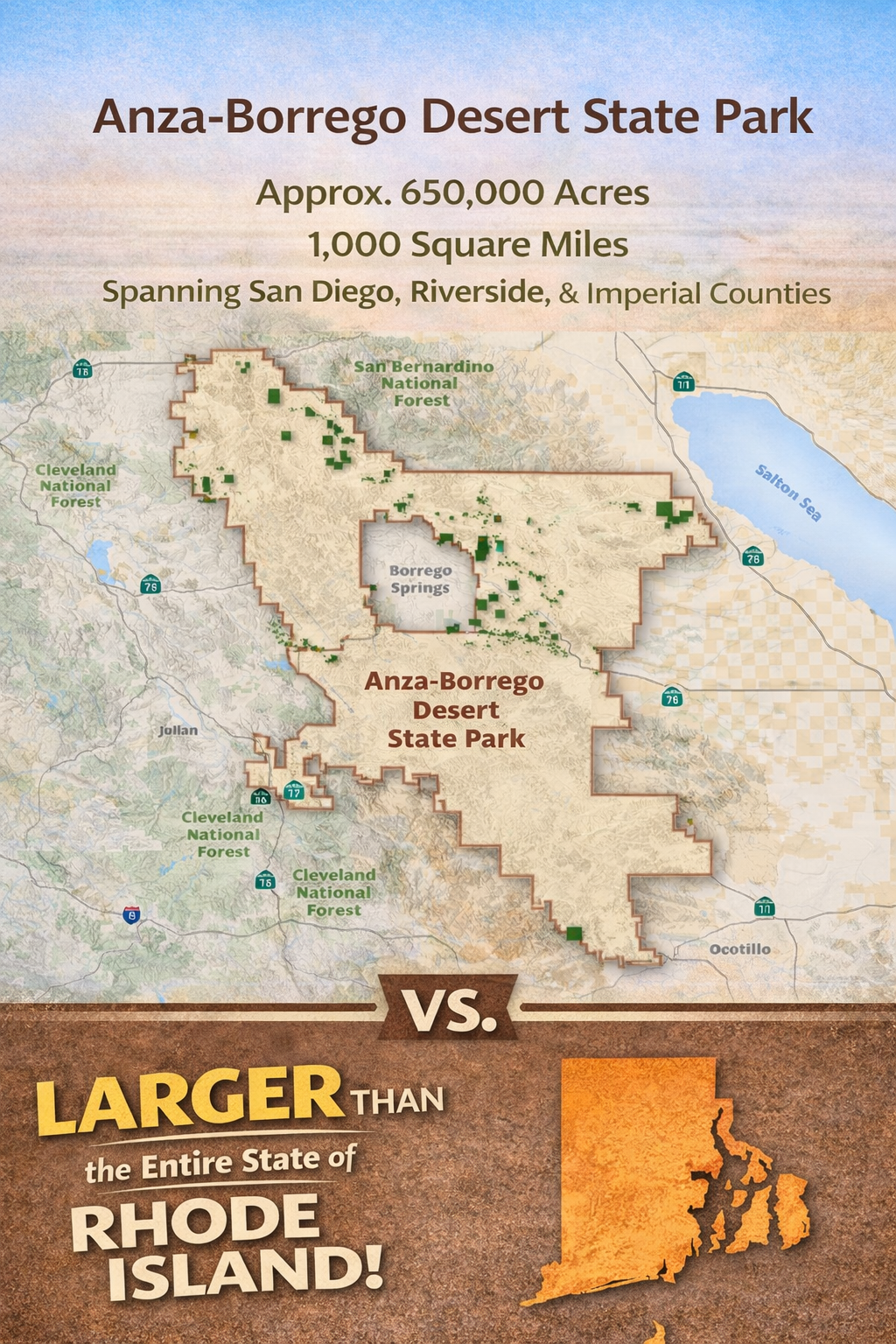
Anza-Borrego Desert State Park is the largest state park in California.
-
Approximately 650,000 acres
-
Roughly 1,000 square miles of protected land
-
Spanning parts of San Diego, Riverside, and Imperial Counties
To put that in perspective:
Anza-Borrego is larger than the entire state of Rhode Island.
That scale matters. In a region where habitat fragmentation is one of the greatest threats to biodiversity, Anza-Borrego remains one of the last places in Southern California where an entire desert ecosystem can still function at landscape scale.
Wilderness Protection: A Vast Network of Wild Land
Anza-Borrego is not only large—it is protected.
The park contains 12 designated wilderness areas, preserving its wild character and ecological integrity. Large portions of the park remain wilderness, where development is restricted and the landscape stays largely untouched.
This wilderness protection safeguards:
-
wildlife movement corridors
-
sensitive habitats
-
rare plant communities
-
the natural soundscape and night sky
-
the experience of true desert solitude
Elevation: From Desert Floor to Mountain Heights
One of the biggest reasons Anza-Borrego is so diverse is its dramatic elevation range.
-
Lowest areas: approximately 15–60 feet above sea level
-
Highest point: Combs Peak at approximately 6,193 feet
-
Total elevation difference: over 6,100 feet
This staggering vertical range creates multiple climate zones and habitat types—meaning you can travel from hot desert basins to cooler mountain environments supporting entirely different plant and animal communities.
Flora: A Desert Garden With Hundreds of Species
Despite its harsh conditions, Anza-Borrego supports extraordinary plant life.
The park is home to approximately 600 native plant species, including desert shrubs, cacti, seasonal wildflowers, and rare localized species that depend on specific soils and microclimates.
Plant communities include:
-
creosote bush scrub and desert washes
-
cactus gardens
-
palo verde and ocotillo landscapes
-
seasonal wildflower fields
-
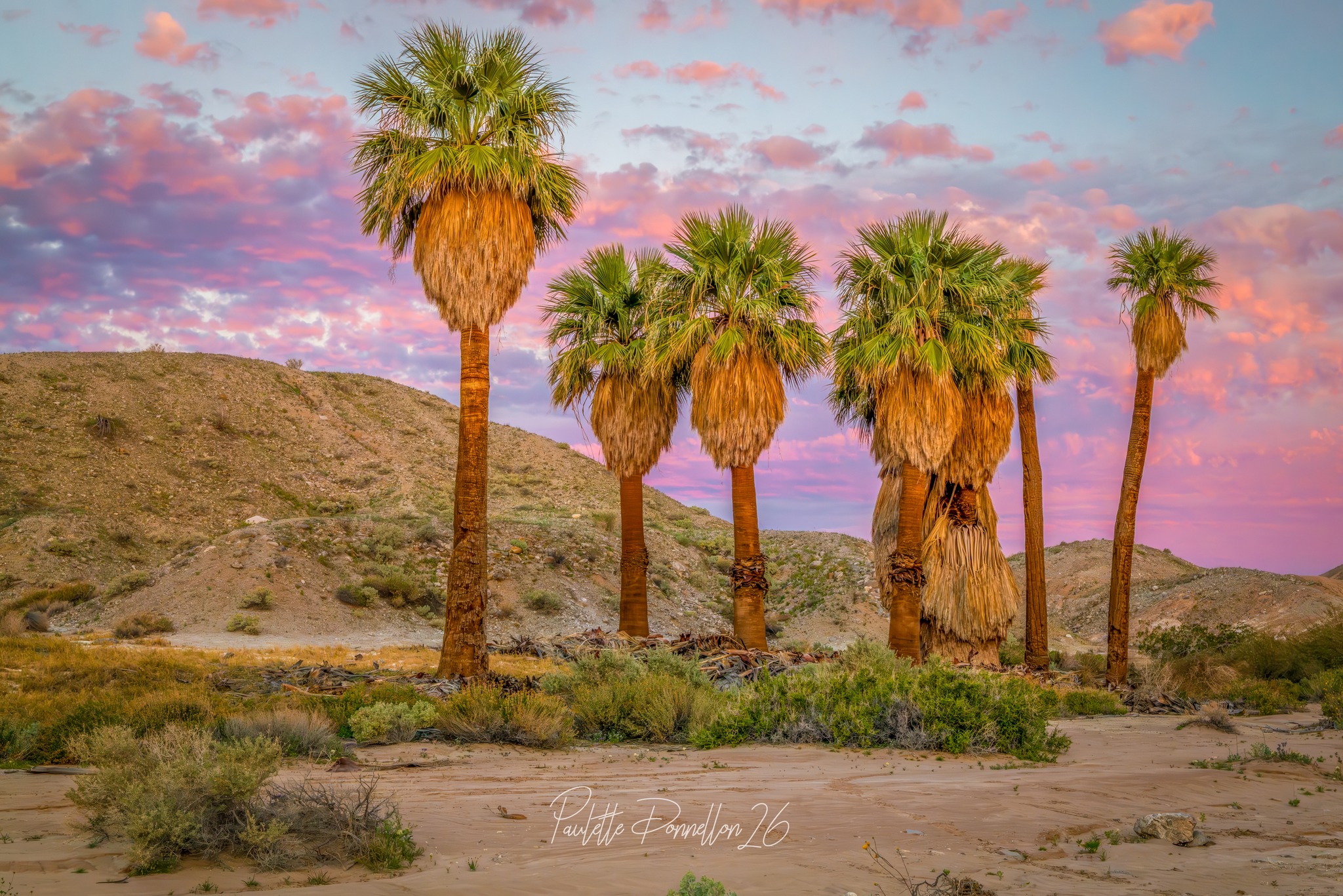
palm oases fed by underground water
One of the park’s most distinctive botanical features is the California fan palm (Washingtonia filifera), the only palm species native to California. These palms survive in hidden desert oases where groundwater emerges at the surface, forming rare habitat islands in an otherwise arid landscape.
Fauna: Desert Wildlife That Thrives on the Edge
Anza-Borrego may appear quiet at first glance, but it is full of life.
The park supports:
-
reptiles and amphibians
-
birds of prey and migratory species
-
kangaroo rats and kit foxes
-
mule deer and mountain lions
-
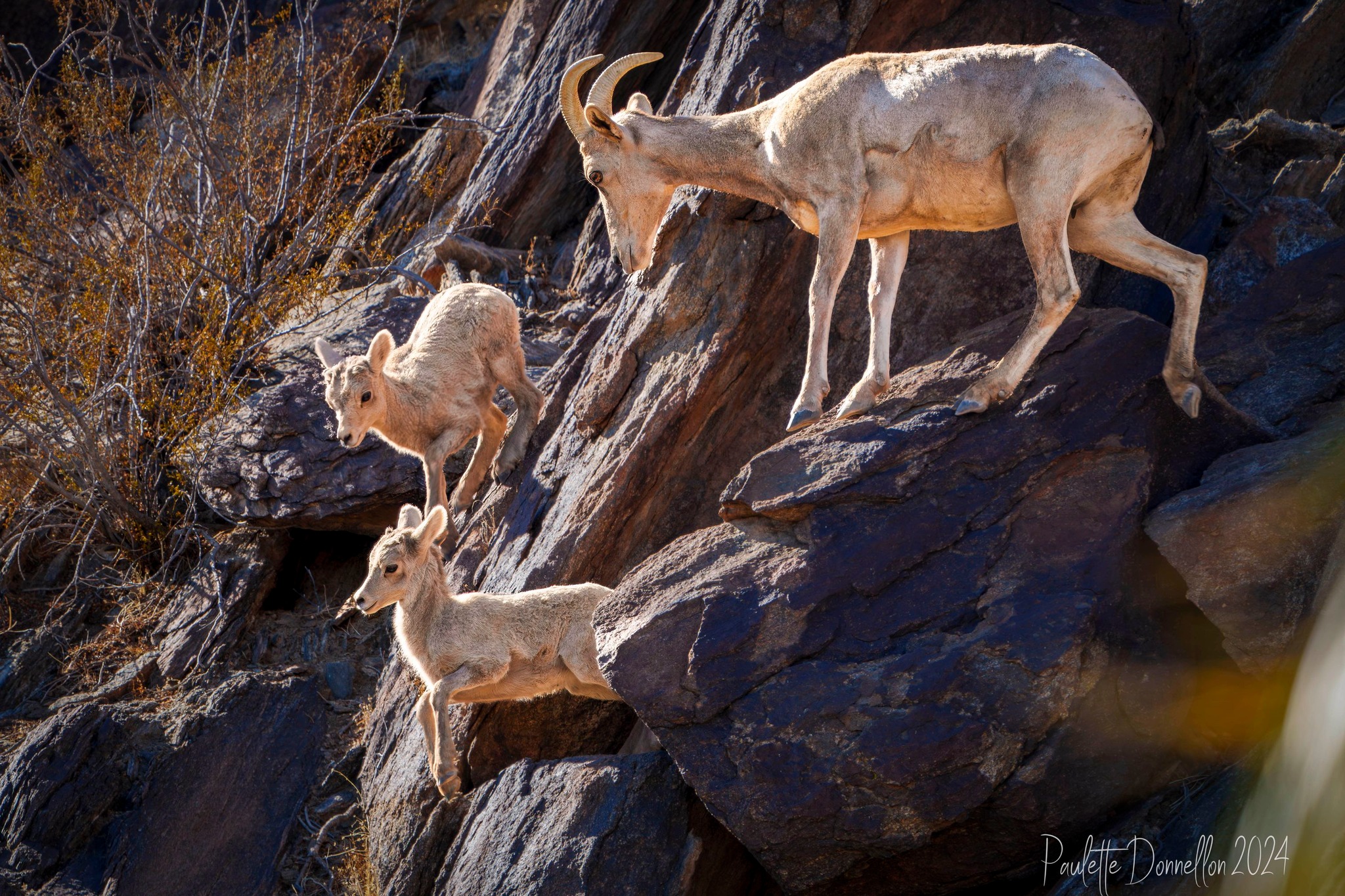
and the iconic desert bighorn sheep
One of the park’s most important wildlife species is the Peninsular bighorn sheep (Ovis canadensis nelsoni), federally listed as endangered. These animals depend on intact habitat, rugged terrain, and reliable access to water—making large, connected landscapes like Anza-Borrego essential for their survival.
Endemic and Near-Endemic Species: Life Found Almost Nowhere Else
Some species in Anza-Borrego occur nowhere else—or very rarely outside the region:
-
Anza desert harvester ant (Pogonomyrmex anzensis)
-
Sandstone night lizard (Xantusia gracilis)
-
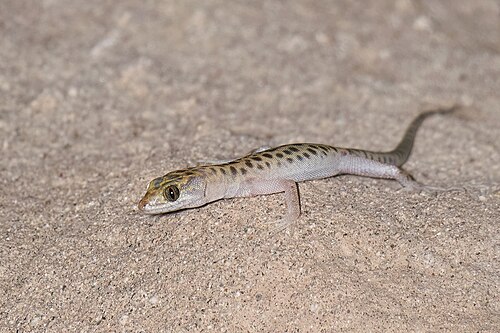
Peninsula leaf-toed gecko
These animals reflect the park’s long evolutionary history as an isolated and extreme environment.
Water in the Desert: Watersheds, Washes, and Palm Oases
Water may be scarce, but it shapes everything.
The park contains:
-
desert washes carrying seasonal stormwater
-
springs and seeps sustaining rare habitats
-
palm oases fed by underground water
-
watershed systems that determine where life can survive
Palm oases are biodiversity hotspots—providing shelter, nesting sites, and food for desert wildlife.
Cultural Heritage: Thousands of Years of Human History
Long before it became a state park, this landscape was home to Indigenous peoples including the Ipai, Tipai and Kamia (Kumeyaay), Cahuilla and Kuupangaxwichem (Cupeño) nations.
For more than 6,000 years, Native communities adapted to desert life—establishing villages, seasonal camps, trade routes, and sacred places across the region.
Today, Anza-Borrego contains more than 4,400 documented archaeological sites—one of the highest concentrations in California’s state park system.
These include:
-
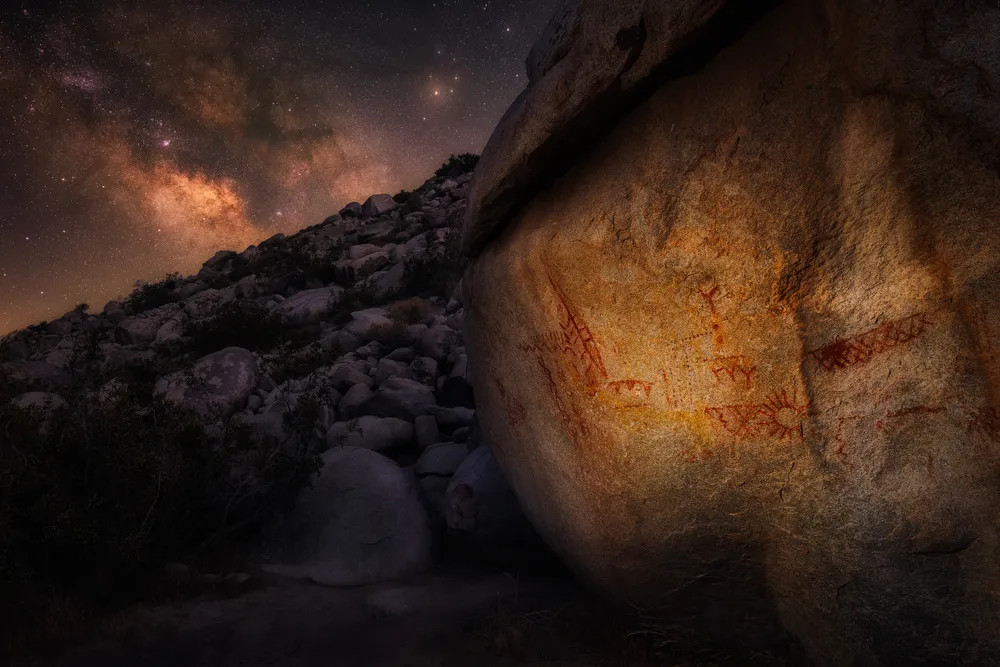
rock art (pictographs and petroglyphs)
-
village and habitation sites
-
food processing areas
-
hunting sites
-
historic homesteads and stage stops
To protect these irreplaceable cultural resources, the park has established eight designated cultural preserves, safeguarding archaeological sites and sacred landscapes for future generations.
These sites are protected by law. Visitors are encouraged to observe respectfully and leave all artifacts undisturbed.
Anza-Borrego’s diversity includes not only plants and wildlife—but human history written across stone and sand.
Fossils and Deep Time: A Living Archive Beneath Your Feet
Anza-Borrego’s badlands preserve one of North America’s richest concentrations of Pleistocene fossils, dating from 2.5 million to about 10,000 years ago.
Fossils found here include:
-
mammoths
-
ancient camels
-
horses
-
giant ground sloths
Erosion continues to reveal prehistoric life, making the park one of the most scientifically significant fossil sites in the region.
Dark Skies: A Rare Sanctuary After Sunset
The Park and the community of Borrego Springs are internationally recognized for dark sky protection.
Minimal light pollution allows:
-
Milky Way viewing
-
meteor showers
-
deep night sky observation
Dark sky preservation benefits not only visitors—but nocturnal wildlife whose behavior depends on natural darkness.
Global Significance: Part of a UNESCO Biosphere Reserve
Anza-Borrego is part of the Mojave and Colorado Deserts Biosphere Reserve, recognized under UNESCO’s Man and the Biosphere Programme.
This designation recognizes the region as globally important for biodiversity, conservation, and sustainable coexistence between people and protected lands.
Anza-Borrego is not only a state treasure—it is part of a globally significant landscape.
A Place of Diversity, Wonder, and Resilience
From:
-
650,000 acres of protected land
-
over 6,100 feet of elevation change
-
approximately 600 native plant species
-
endangered wildlife like the Peninsular bighorn sheep
-
more than 4,400 known archaeological sites
-
eight designated cultural preserves
-
fossil beds spanning millions of years
-
globally recognized biosphere status
Anza-Borrego Desert State Park is one of the most diverse and extraordinary landscapes in California.
This is not an empty desert.
It is a living system—ecological, geological, and cultural—complex, resilient, and breathtaking.
It is worthy of protection for generations to come.
Want to Help Protect This Extraordinary Place?
The Anza-Borrego Foundation works year-round to support the Park through:
-
land conservation
-
education and interpretation
-
direct Park support
-
research support
Donate to help protect Anza-Borrego
Photos: Paulette Donnellon, Chris Maust, Wikipedia